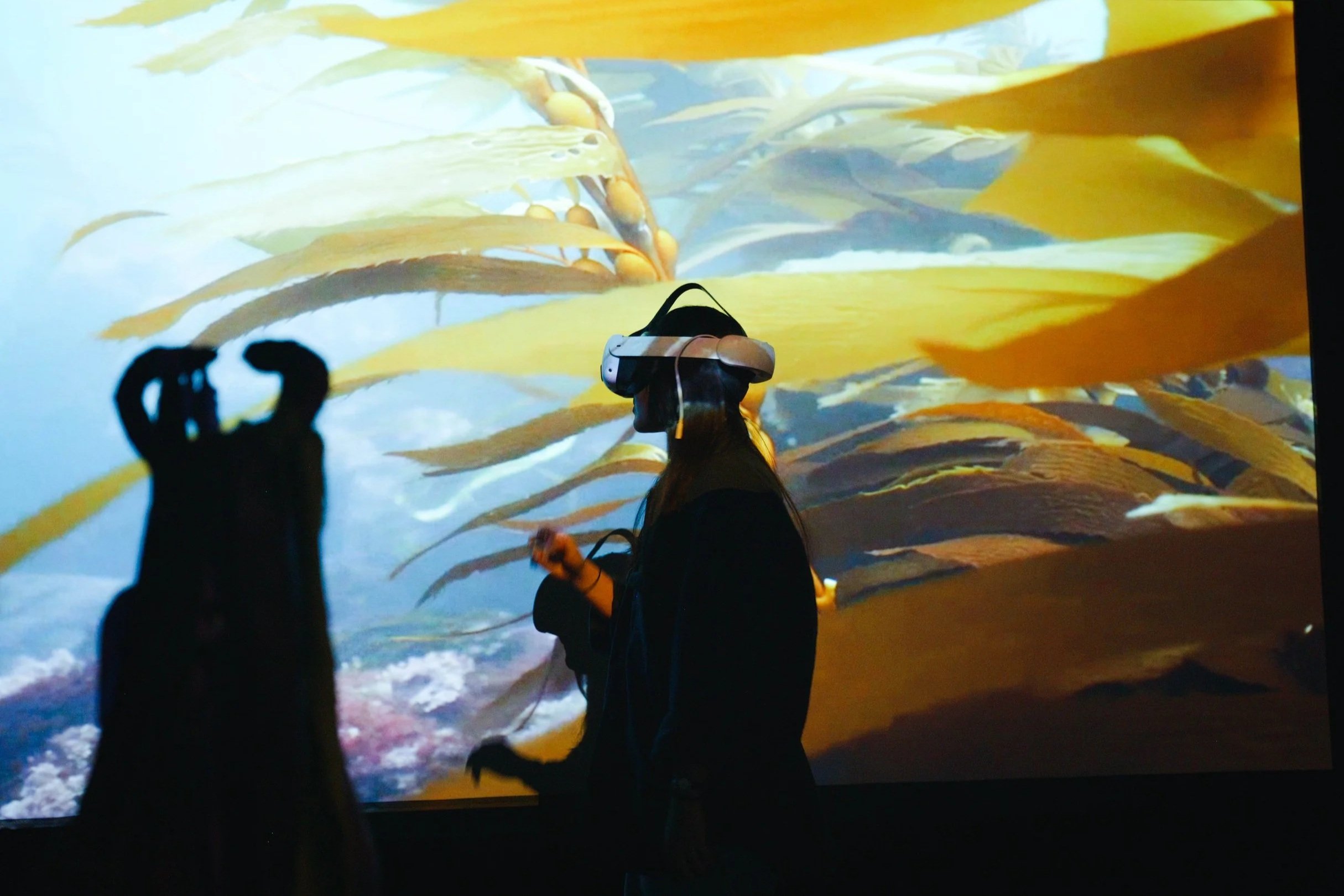
how to exist
VR film by Zeynep Abes
Installation background by Ellie Schmidt
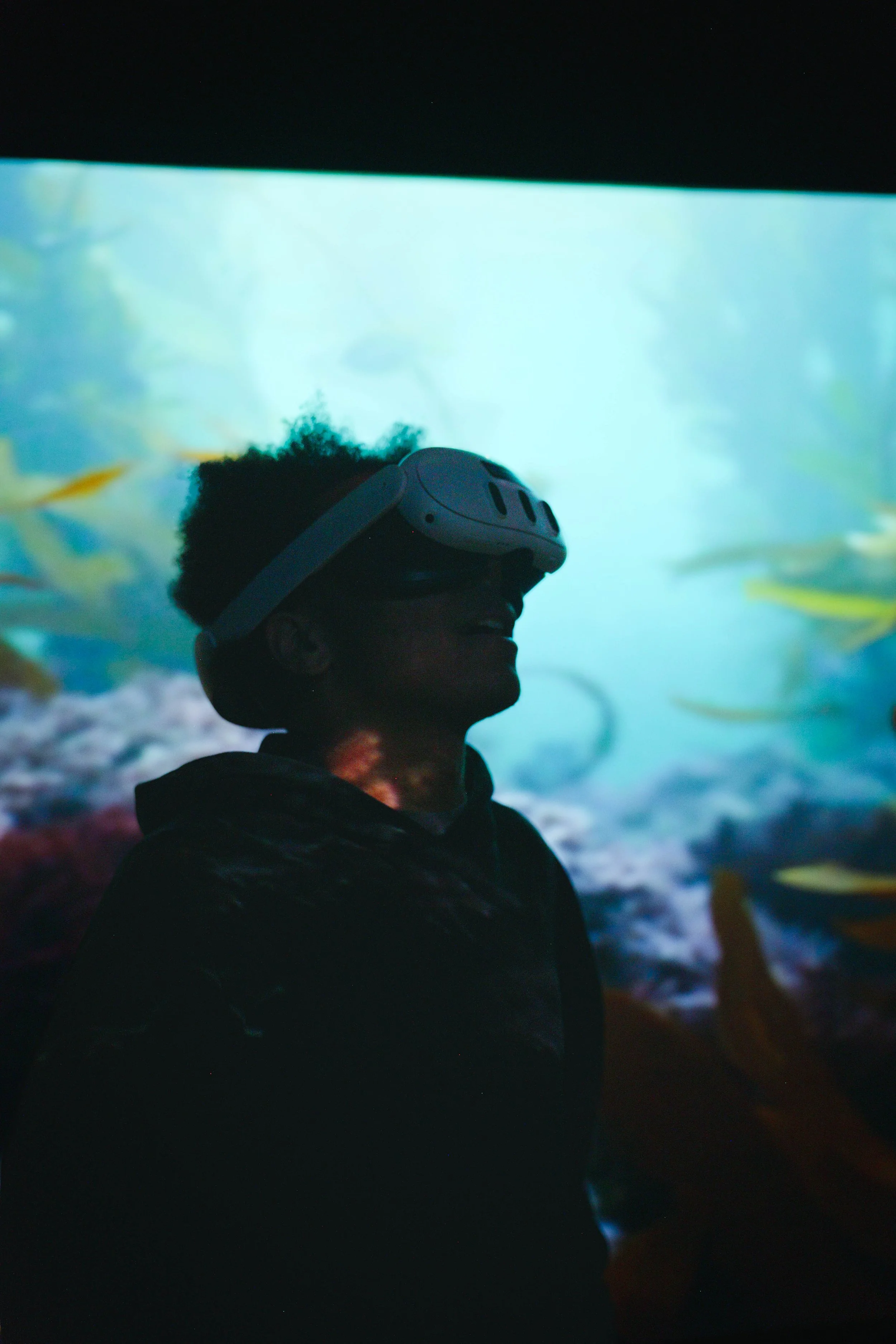
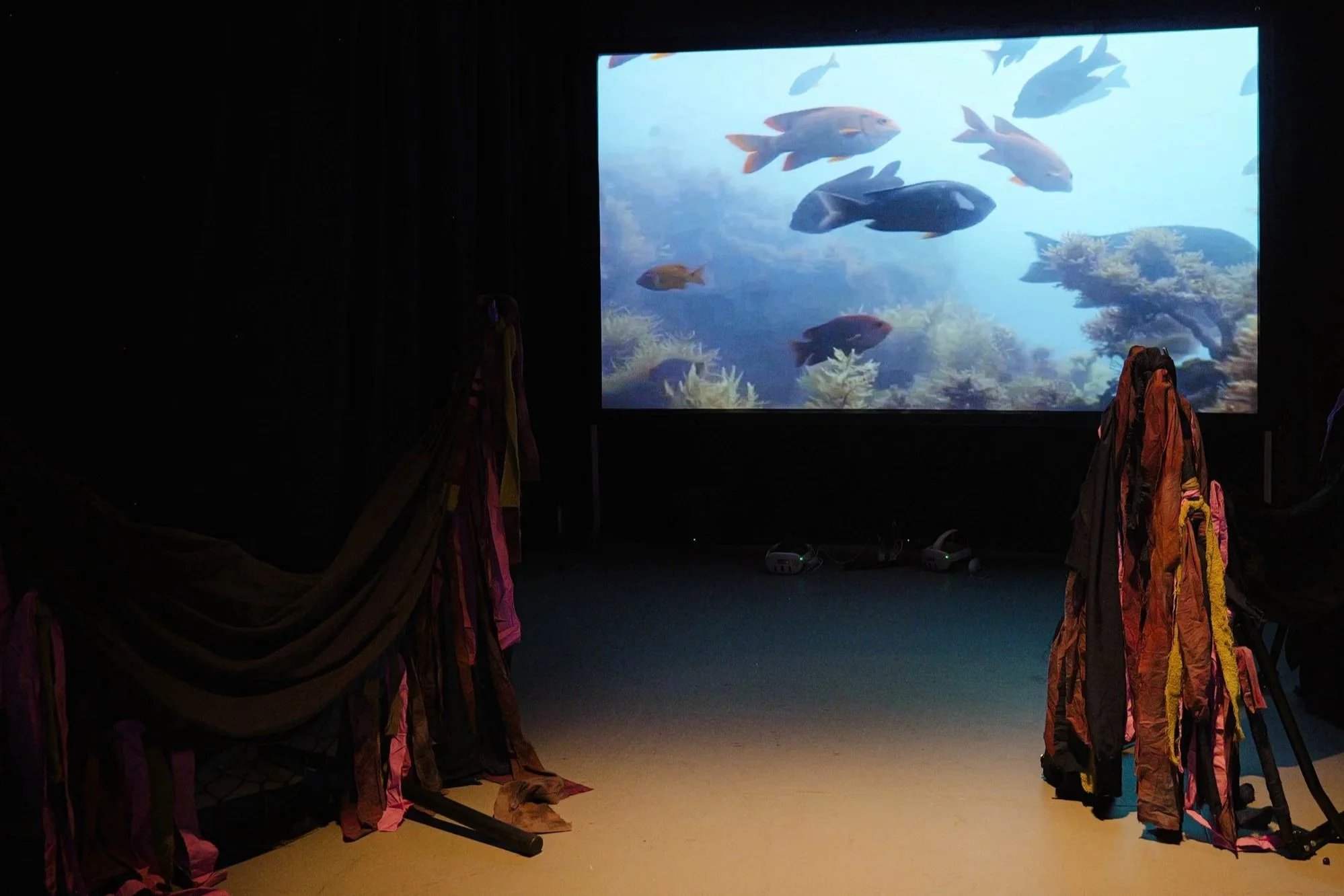
how to exist
VR film by Zeynep Abes
Installation background by Ellie Schmidt
a VR installation made in collaboration with the Ganek Immersive Studio
made with the support of a Future Cinema Creator’s grant
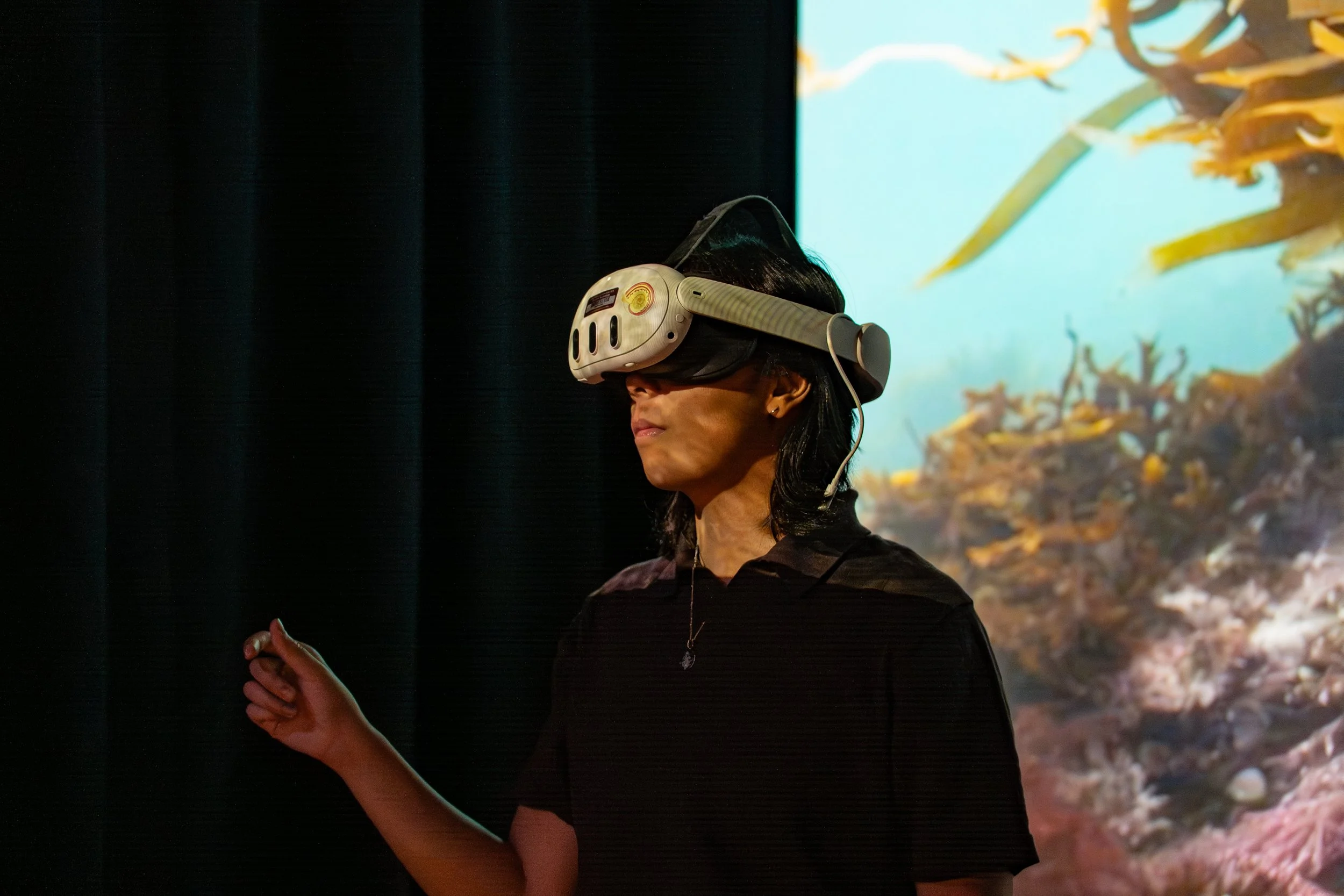
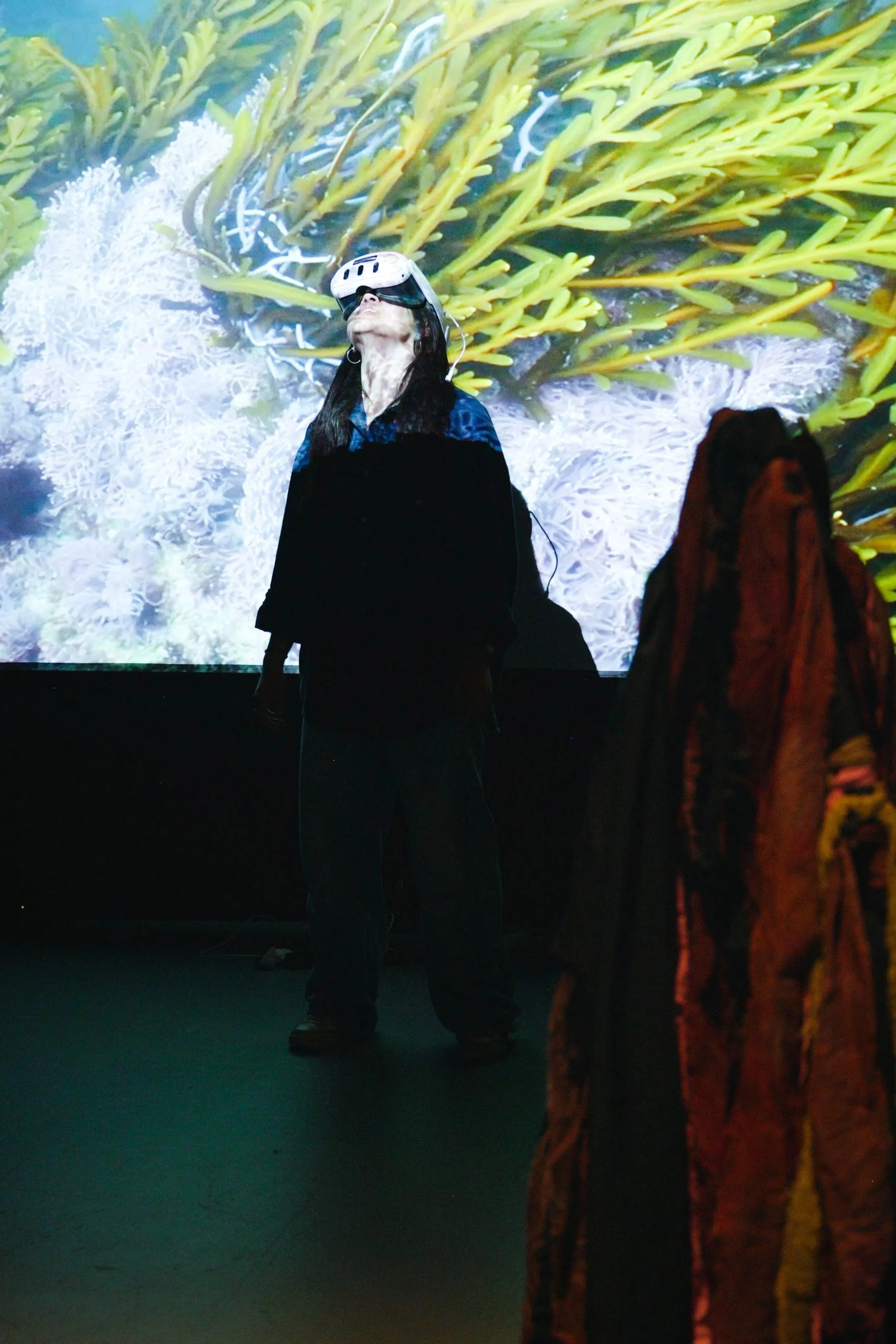
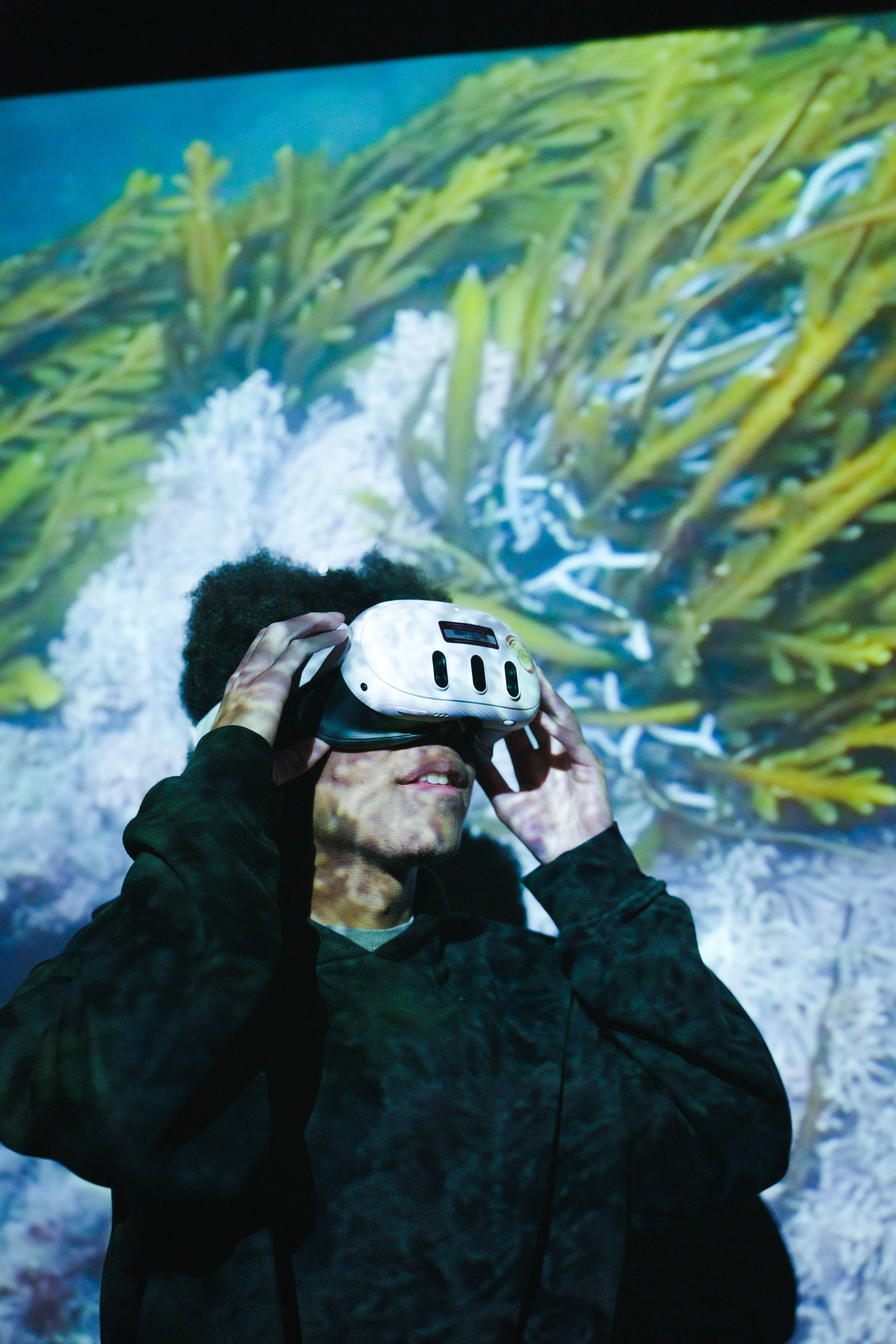
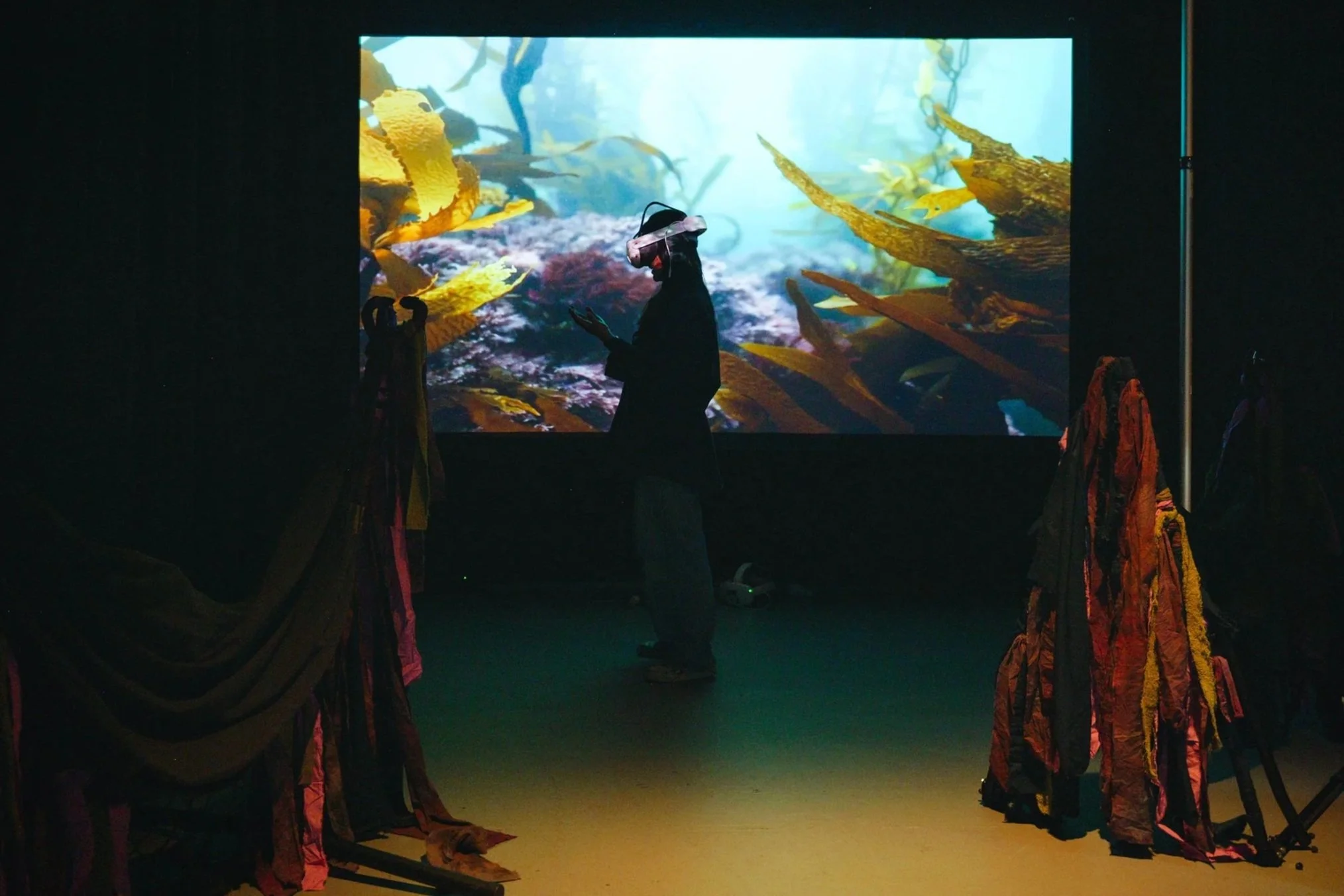
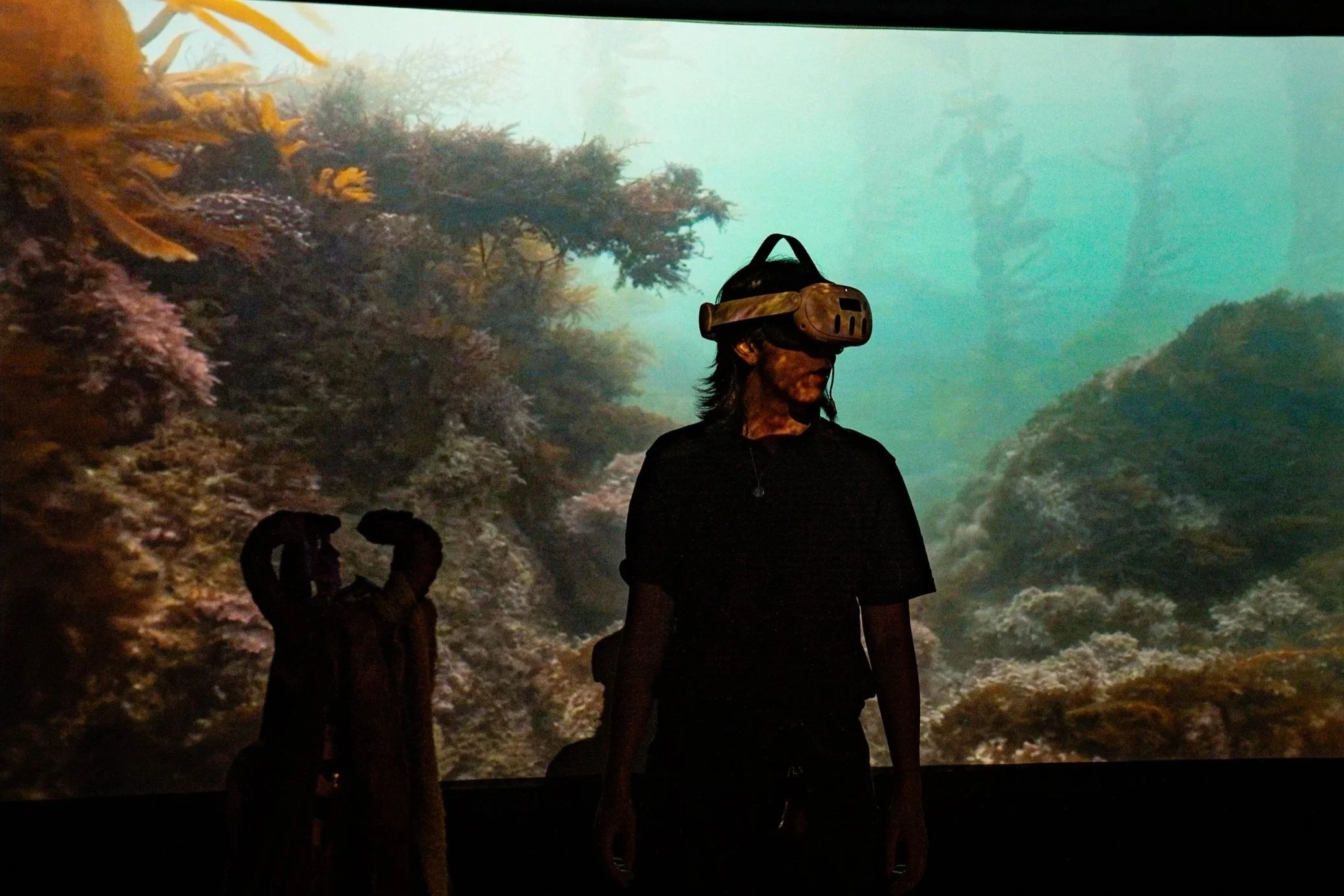
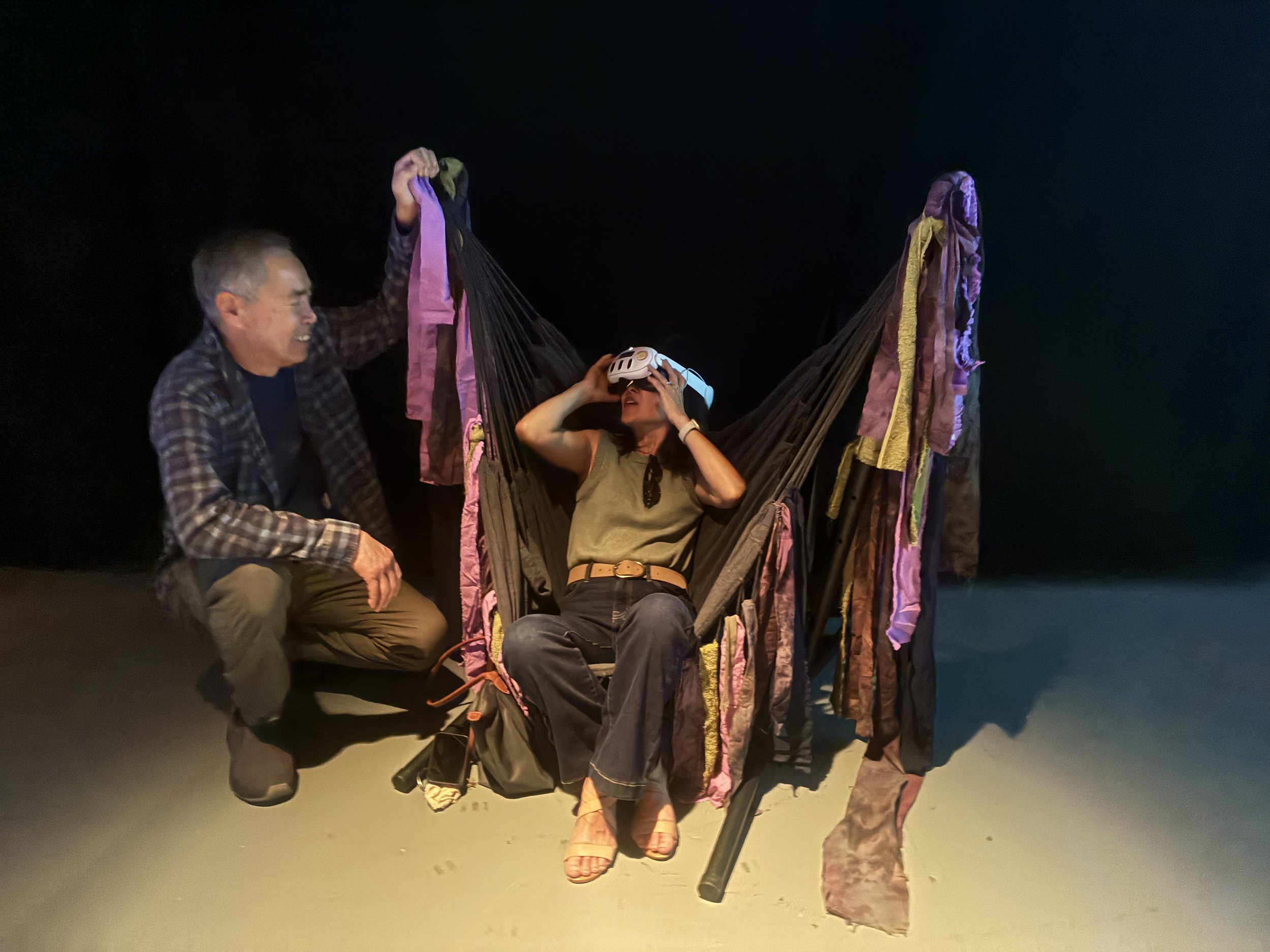
“how to exist” is a gallery installation with three 180-degree 3D videos played in Meta headsets. Each video is 2-3 minutes long, and runs in a sequence, and includes audio. The videos represent California kelp forests at three different levels of submersion— from the surface waters, to the shallow sea floor, to the profound depths of the kelp forests.
Creating this project, we pushed current tools in 3D scanning and modeling and AI generation, seeking to create an immersive, bodily experience of the spectacle and continuous motion of California kelp forests.
We were inspired by our work as science divers in California, and our work volunteering as kelp restoration divers. Weaving together our research and experience researching and helping with marine science, as well as Zeynep’s knowledge of cutting-edge modeling technologies, we rendered these three ocean landscape scenes.
The installation also included “the light in the cove,” a short film exploring the character of a cove which was made with the support and guidance of a Future Cinema Creator’s grant.
I used AI tools to animate still images that I took underwater in kelp forests at Catalina Island and Palos Verdes. What possibilities can AI tools offer us as filmmakers that can’t be achieved by other means? In this instance, I found that the strange AI artifacts added an element of surrealism, strangeness, and surprise. The fish don’t seem like real fish, the colors and the light are hyper-real, or strangely too detailed and visible. I liked it when the AI tool accidentally understood “surge” to mean waves and created weird underwater waves. I used audio collected from Catalina, above water and below water, to compliment the surreal feeling I was experiencing. AI tools are changing and improving daily it seems, and among the ethical questions of working with AI, as with all powerful technology, it was interesting to create a small project that captures what is possible today.
We plan to continue iterating on this project, hopefully to develop a full 360-degree navigable VR experience.
Special thanks to Ganek Immersive Studio, Holly Willis, Tom Thudiyanplackal, and the staff at USC Wrigley.